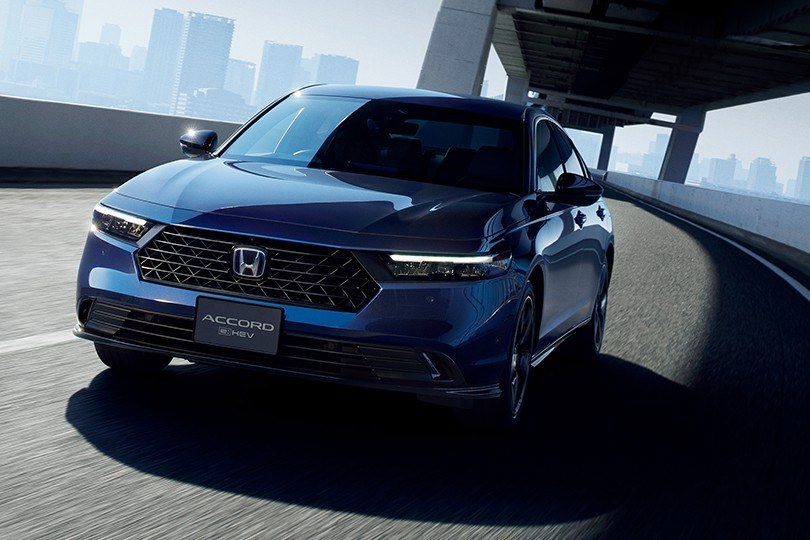

Introduced in 1976, the Accord was conceived as “a car in harmony with people and the times.” Environmental performance, safety, usability, and driving enjoyment—the starting point was the challenge of bringing all of these elements together as a complete automobile.
Over the decades, Accord evolved into a global model by incorporating the technologies and values demanded by each era. Delivered to customers in more than 160 countries and regions, with cumulative sales exceeding 25 million units, it has supported Honda’s growth around the world.
This issue of Honda Stories looks back on that 50-year journey.
The origin of “a car in harmony with people and the times”
In the 1970s, the environment surrounding automobiles was undergoing major change. Regulations on emissions were becoming stricter, while demands for greater safety continued to rise. At the same time, qualities directly connected to everyday usability—such as utility, driving performance, and ride comfort—were becoming increasingly important.
Honda sought to balance “responding to society” with “delivering value to people,” asking a fundamental question: What is truly essential in a car? The answer took shape as the Accord.
At the core of its development was the pursuit of both comfort for occupants and harmony with the many environments surrounding the automobile.
One symbol of this philosophy was the CVCC engine. Through advanced combustion control, it reduced emissions while maintaining driving performance—an innovative achievement at the time that balanced environmental responsibility with enjoyable driving.
To improve safety, Honda also sought to engineer the intuitive concept of “ease of use” such as through the “Visibility Index” for quantitatively evaluating driver visibility. This effort was not only about crash safety but also about helping drivers avoid danger with greater confidence by organizing and communicating essential information more clearly.
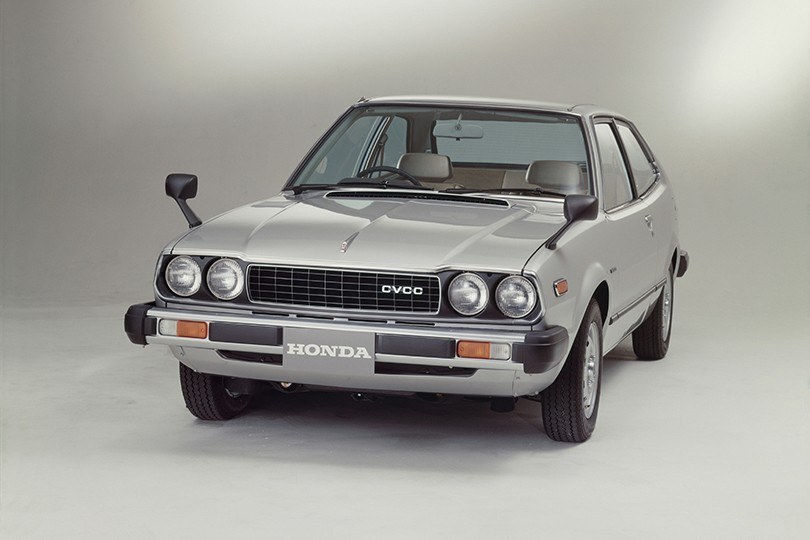
First-generation Accord Hatchback LX
This philosophy continued to shape subsequent technological development, evolving toward cars that felt more natural to operate and more reassuring to drive.
For example, the second-generation Accord introduced power steering that adjusted steering effort according to vehicle speed, along with a navigation system utilizing gyro sensors. These technologies reduced driver workload and improved situational awareness, contributing to a more confident driving experience.
The third-generation model further enhanced driving performance through the adoption of suspension technology derived from sports cars.
Through these steady advancements, Accord continued evolving around its core values: driving performance and space designed for people.
Creating value locally: Evolution as a global model
Accord’s evolution extended beyond technology—it also influenced the very way automobiles were developed and produced.
A major turning point came in 1982, when Honda began local production in the United States. Honda became the first Japanese automaker to establish full-scale automobile production overseas.*
Behind this move was the concept of “Three-region optimization.” Rather than delivering the exact same vehicle globally, Honda pursued the idea of creating the optimal value for each region.
Japan, North America, and Europe each demanded different qualities.
In North America, spacious performance and stability. In Europe, highly responsive handling. In Japan, efficiency and ease of maneuverability.
Accord evolved from being “a car delivered uniformly around the world” into “a car delivering value suited to each market.”
This philosophy carried forward into later development, with technologies and equipment tailored to regional needs continuously enhancing the product’s overall refinement.
*According to Honda research
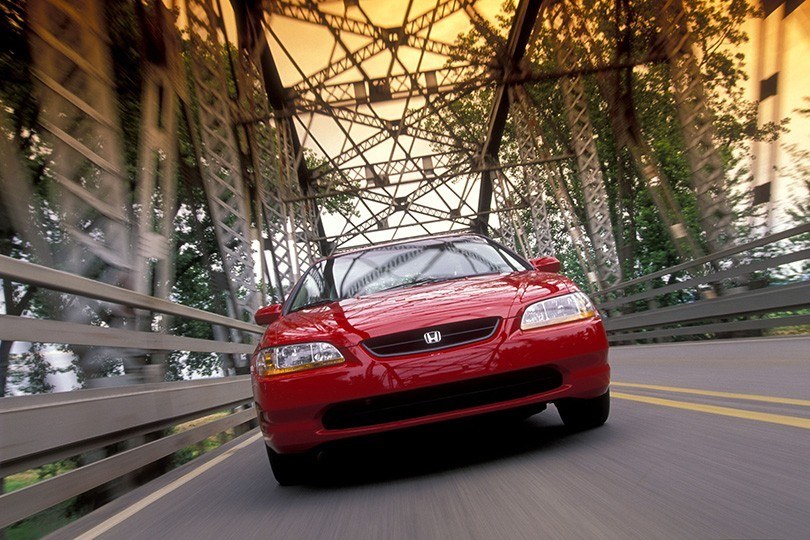
Sixth generation Accord (US Market 1998)
Widely supported by customers in the United States, Accord became the first Japanese vehicle to achieve the No.1 position in U.S. passenger car sales from 1989 to 1991.
In 2018, Honda also reached cumulative automobile production of 25 million units in the United States, and the commemorative vehicle was an Accord.
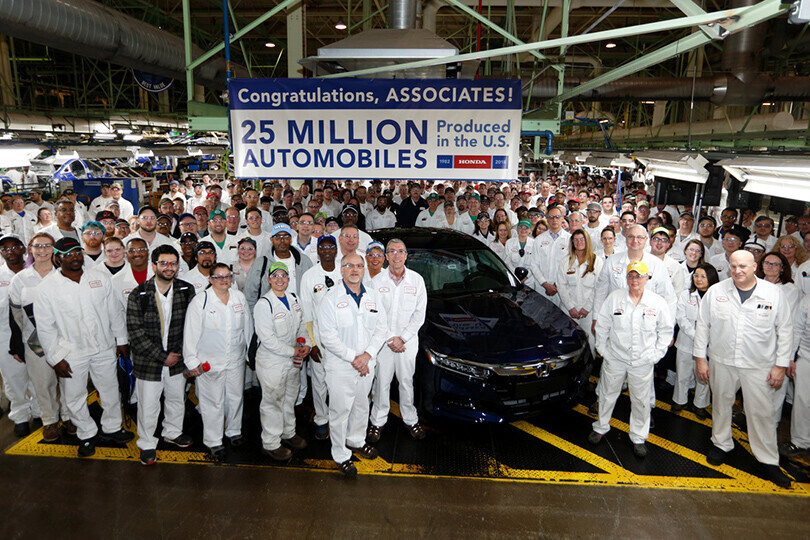
Having delivered more than 25 million units to customers across over 160 countries and regions worldwide, Accord will continue evolving as one of Honda’s signature global models.
Inheritance and evolution: The philosophy living on in the latest model
The philosophy of “a car in harmony with people and the times” continues to this day.
Naoki Yokoyama, development leader of the 11th-generation Accord, began with a straightforward desire: to create a truly good car. As the team explored what a “good Accord” should be, the concepts of spaciousness and depth emerged as defining themes.
Yokoyama compared this to “a wide balance beam.” Rather than something only a limited number of people could master, widening the beam allows more people to move freely with confidence and reassurance.
The result was a car that feels like a trusted companion, with its control technologies naturally supporting the driver to create a richer mobility experience.
One example is the two-motor hybrid system, e:HEV. Its ability to drive primarily with the motor while efficiently utilizing the engine as needed reflects the same philosophy first embodied by CVCC: balancing environmental performance with driving enjoyment.
In addition, Honda SENSING 360+, the omnidirectional safety and driver assistance system featured in the latest e:HEV models, carries forward Honda’s philosophy of enhancing safety and contributes to creating an environment where drivers can operate the vehicle with greater confidence and peace of mind.
Can environmental performance and driving enjoyment coexist while delivering new value? The ongoing pursuit of that question has driven the evolution of Accord.
Accord will continue evolving by incorporating the values demanded by each era. Yet the philosophy at its core—creating automobiles in harmony with people and the times—will remain unchanged.